Some dog owners would like to feed their dogs a raw food diet, just like their ancestors ate in the wild. But it’s just not practical for most people. You’re busy, you have no freezer space, or the nutritional knowledge to do this properly. Or maybe you’re not convinced that a raw food diet is safe, salmonella bacteria is a real concern. Another consideration is the ethical concern regarding factory-farm animal treatment.
So the next best option is finding a high-quality food for your dog. But which one?
What food should you feed your Doberman?
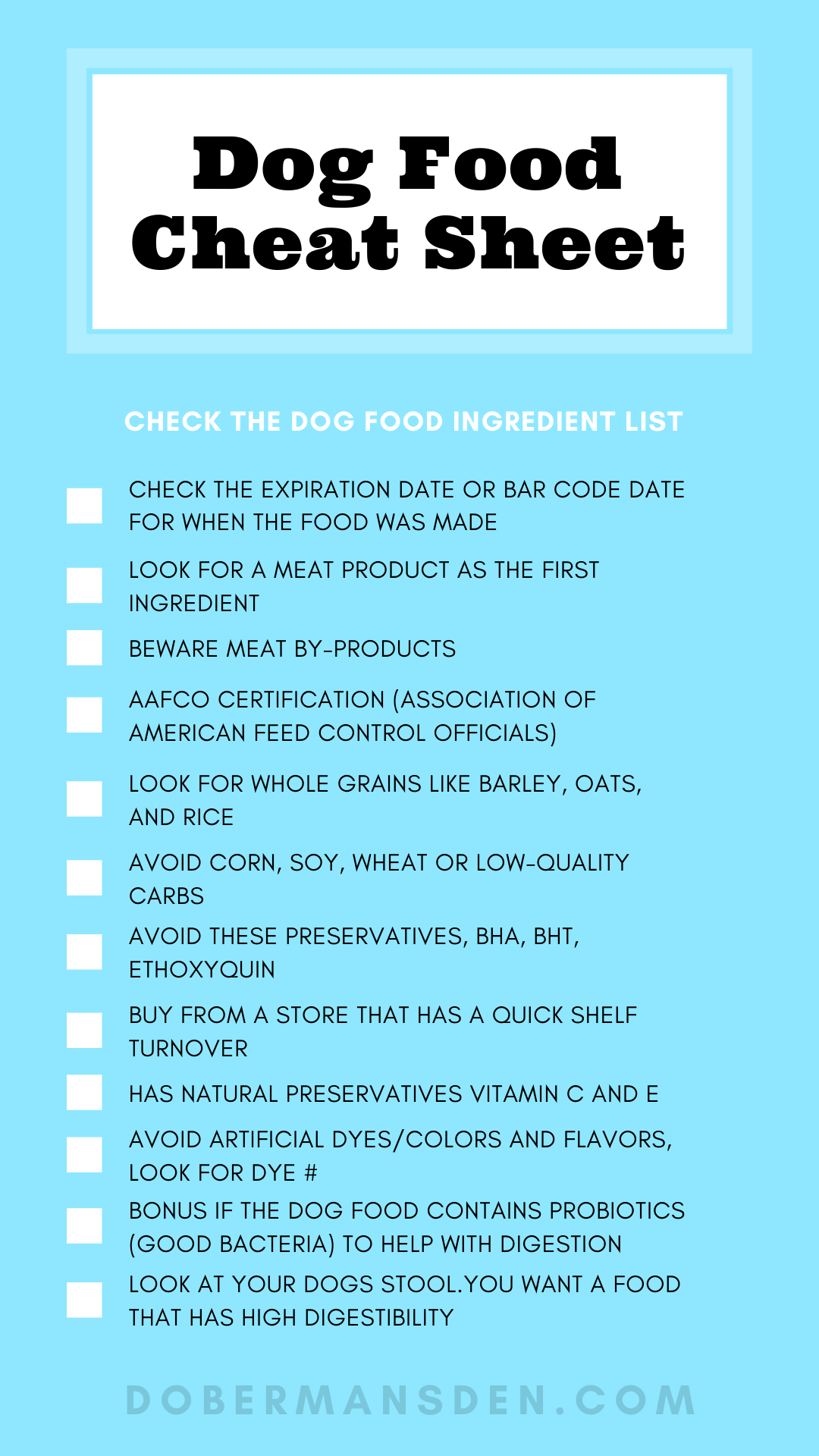
 Here is a dog food checklist you can print and take with you to the store to help you compare and choose from the different dog food brands. This should help you figure out which dog foods are good and which are harmful or nutrient deficient.
Grab the dog food bag, look at the ingredient label and compare it to this checklist. Following these guidelines doesn’t guarantee you’ll get good quality, human-grade ingredients, or that the processing techniques haven’t destroyed most of the nutrients, but it will filter out the worst commercial dog foods.
How many cups should you feed your Doberman?
Use the feeding portion sizes on the bag as a guideline, not a rule. The amount you need to feed a dog varies depending on its age, breed, activity level, and any specific health issues. If you’re not sure if your feeding too much or too little, compare your dog’s weight against the Dog Body Condition Chart and adjust the portion sizes as needed. Remember keeping your dog on the thinner side is healthier than keeping him on the fatter side.
DOG FOOD GUIDE CHECKLIST
Look For This:
- Check the expiration date or bar code date for when the food was made. You want to buy the freshest, especially since natural preservatives in dog food are only effective for about 30-60 days.
- Look for a meat product as the first ingredient, like chicken meat or lamb meat. You want human grade meat (USDA) and better yet, organic meat if you can afford it. Organic meat is less likely to contain hormones, growth stimulants, or come from diseased animal flesh.
- AAFCO certification
- Natural preservatives Vitamin C and E (or Tocopherol)
- Look for whole grains like barley, oats, and rice. Or better still, buy grain-free dog food. Dogs in the wild eat primarily meat with some fruits/vegetables, they are carnivores primarily.
- Buy from a store that has a quick turnover of product for optimal freshness
- You want a food that has high digestibility. You can find out how digestible the food is just by looking at your dogs’ stool. If the volume of the stool produced is greater than, equal to, or slightly less the volume of food eaten, the digestibility is poor. The aim is to have a smaller stool volume with little odor, this indicates good digestibility.
- Bonus if the dog food contains probiotics (good bacteria) to help with digestion
Avoid This:
- Avoid these preservatives, they have been shown to cause health problems, BHA, BHT, Ethoxyquin
- Meat by-products, this is basically animal parts that are not muscle like brains, intestines, blood, and chicken feet. (note that not all by-products are necessarily bad, organs are nutritious but avoid non-edible things like hair or hooves, unfortunately, labels don’t tell us exactly what the by-product material is.)
- Avoid corn, soy, wheat, or low-quality carb fillers (these are common allergens), dogs need protein, not grain carbs
- Avoid foods with artificial dyes or colors and flavors, these are usually listed as a dye number.
Rather than going through and rating some popular dog food brands, I thought this checklist would be more practical. This way you can compare dog food brands that are available for sale in your local pet store or country. Again, keep in mind that you want to buy a product that has a good turnover to get the freshest possible dog food. I have covered the basics here but for more details on specific dog food brands, check out this informative site dogfoodadvisor.com
Doberman Food Checklist
Here is the printable checklist to help you evaluate dog food. Just click on the image to get the full size.
If you missed the previous post on food for your Doberman here it is.
Keep reading: The Importance of Slow Feeding Dog Bowls >> Kong Stuffing Recipe Ideas >>
my doberman eats Proplan chicken and rice. Also he arranges his toys in different shapes.
Rachel Ray makes Nutrish dog kibble. There are 3 or 4 flavors and it is grain-free. My dog is very healthy and her coat looks great. It’s available at Walmart but not pet stores. There are usually less than 9 ingredients. I’ve been very happy with it.
I’ve been feeding science diet sensitive skin and digestive system an it works so well with my dog but they just changed their bags to smaller bag and 2$ more and that’s just crazy and I have got to find something else please anybody got any suggestions
This is some decent information, however, I would like to add a word of caution about organic products. It is true that to be certified organic they cannot include certain, tested antibiotics and hormones, however, the field of organic produce is extremely poorly regulated with only minimal guidelines. As an animal science major, I have read and performed numerous research projects that use other “supplements” that are approved by organic certifications, but have limited long term and animal health testing. Not to say all organic products are bad, I myself have raised numerous livestock 100% organic, I just think as consumers we should be aware that organic does not necessarily mean better or safe. I definately agree that feed tests are very important, and that what works for one dog does not always work for another. Despite their systems being almost the same, they are individuals and have varying levels of tolerance for different products. For example, my great dane does very well on both corn and chicken, and my german shepherd does poorly on both, prefering venison, lamb, and brown rice.